NSW·BCW·002
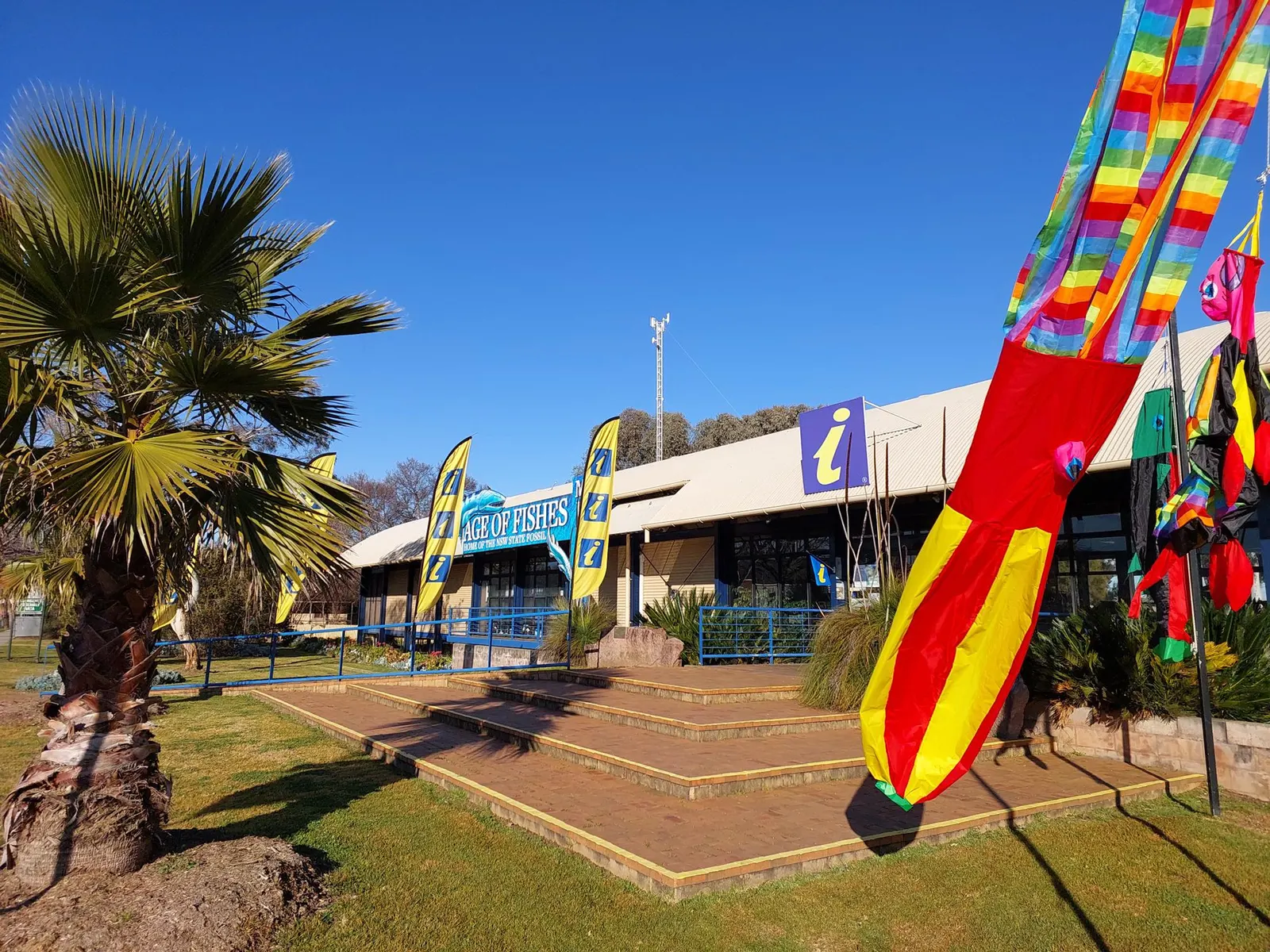
Age of Fishes Museum
Also known as: The Age of Fishes Museum
Natural History
About
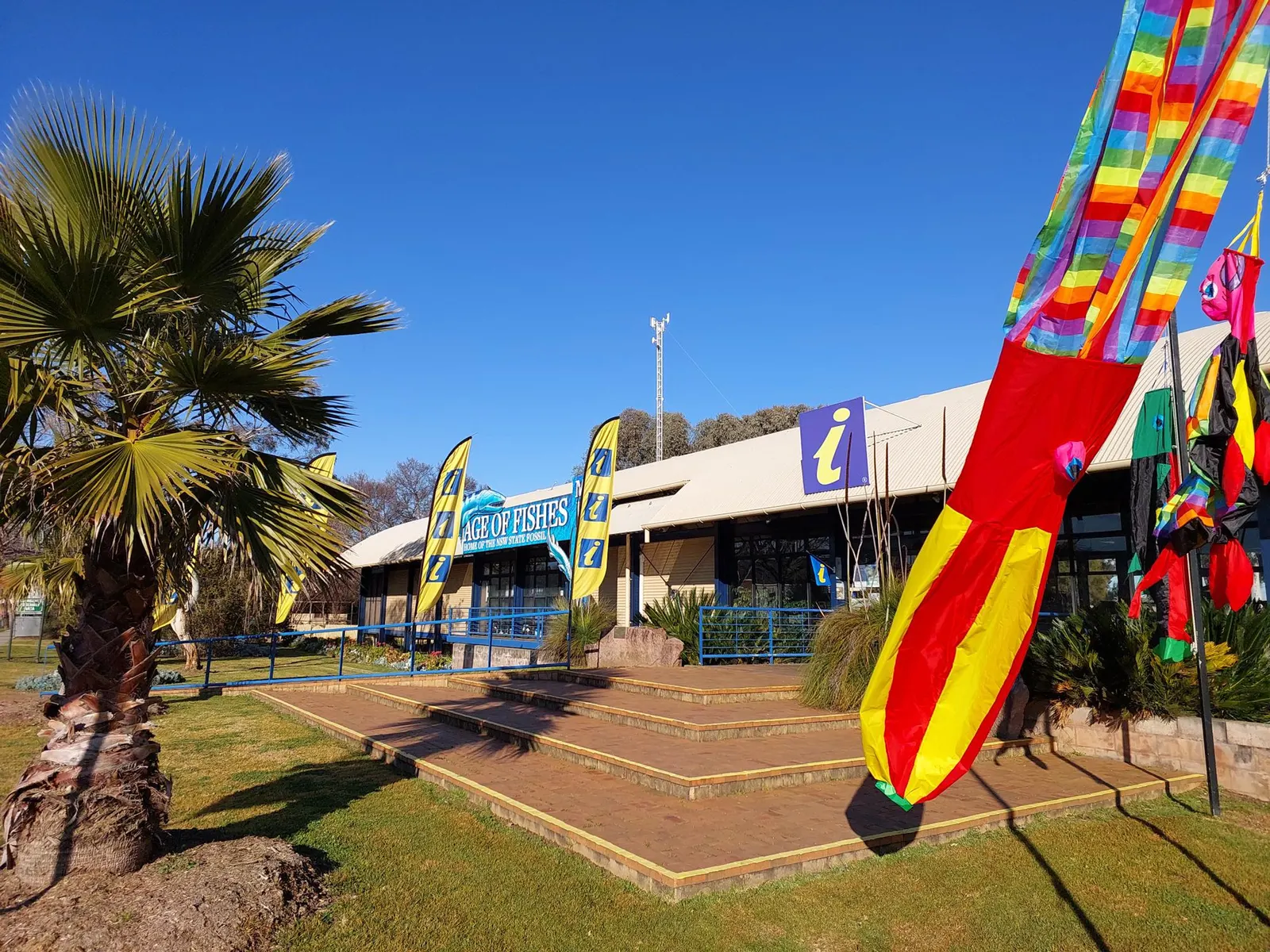
Museum in Canowindra built around one of the world's most remarkable Devonian fossil discoveries: thousands of 360-370 million-year-old freshwater fish recovered from a mass-kill billabong site nearby. Displays include the famous 1956 slab returned from the Australian Museum, a live aquarium and a fossil dig experience; now operated by Cabonne Council.
The collection
The museum interprets the Devonian 'Age of Fishes' through the Canowindra fossil site, where a 1955 roadworks discovery and a 1993 excavation led by Dr Alex Ritchie recovered over 4,000 fish specimens, many unique to the region. Displays include the original 1956 slab (returned from the Australian Museum), fossil fish such as armoured placoderms and early air-breathing forms, a live aquarium, a timeline walk, giant board games and fossil dig pits. The museum also holds the 1963 EJ Holden 'fossil car' bequeathed by Ken Soward.
Objects of note
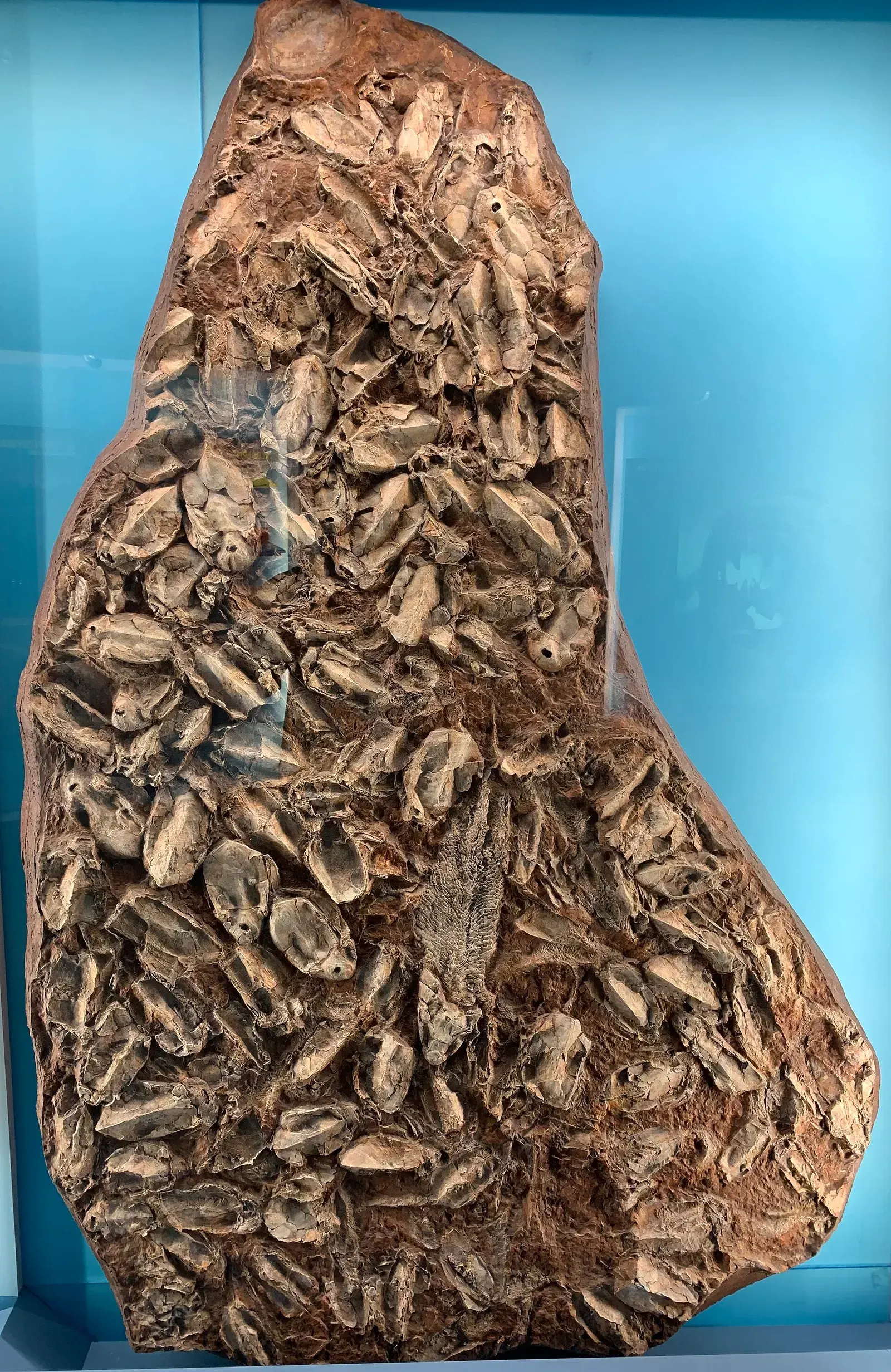
Bloopityboop (CC BY-SA 4.0) The 1956 SlabInternational significanceMineral / FossilLate Devonian, 360-370 million years ago
The original fossil slab discovered during roadworks west of Canowindra in 1955, packed with 114 fish that died when their freshwater billabong dried up in the Late Devonian. Taken to the Australian Museum in Sydney in 1956, where its significance was confirmed by Harold Fletcher and colleagues, it returned home in 2006 to be permanently displayed at the Age of Fishes Museum. Most individuals in the slab are the antiarch placoderms Remigolepis walkeri and Bothriolepis yeungae, with the lobe-finned Canowindra grossi the largest fish present.
The discovery slab of one of the world's great Devonian fossil sites, a mass-mortality Lagerstatte preserving a unique window into early vertebrate life.
- Materials
- Mandagery Sandstone with fossil fish
- Provenance
- Found by a council road worker in 1955 and recognised by local beekeeper Bill Simpson; held by the Australian Museum 1956-2006; returned to Canowindra for permanent display at the Age of Fishes Museum.
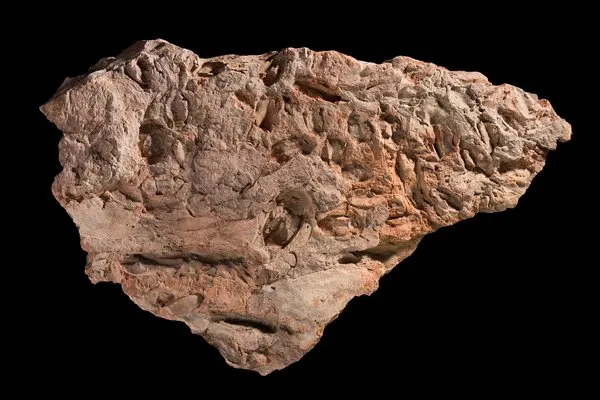
Australian Museum (All rights reserved) Mandageria fairfaxi fossilsNational significanceMineral / FossilLate Devonian, 360-370 million years ago
Specimens of Mandageria fairfaxi, a large lobe-finned sarcopterygian fish up to about 1.7 metres long found only at the Canowindra fish bed. Recovered in the 1993 excavation led by Dr Alex Ritchie, which used a bulldozer to recover 70-80 tonnes of slabs containing around 4,000 fish, Mandageria was declared the official NSW State Fossil Emblem in 2015.
The official State Fossil Emblem of NSW (declared 2015), found only at Canowindra.
- Materials
- fossil fish in Mandagery Sandstone
- Provenance
- Excavated at the Canowindra site in 1993 under Dr Alex Ritchie of the Australian Museum; displayed at the Age of Fishes Museum.
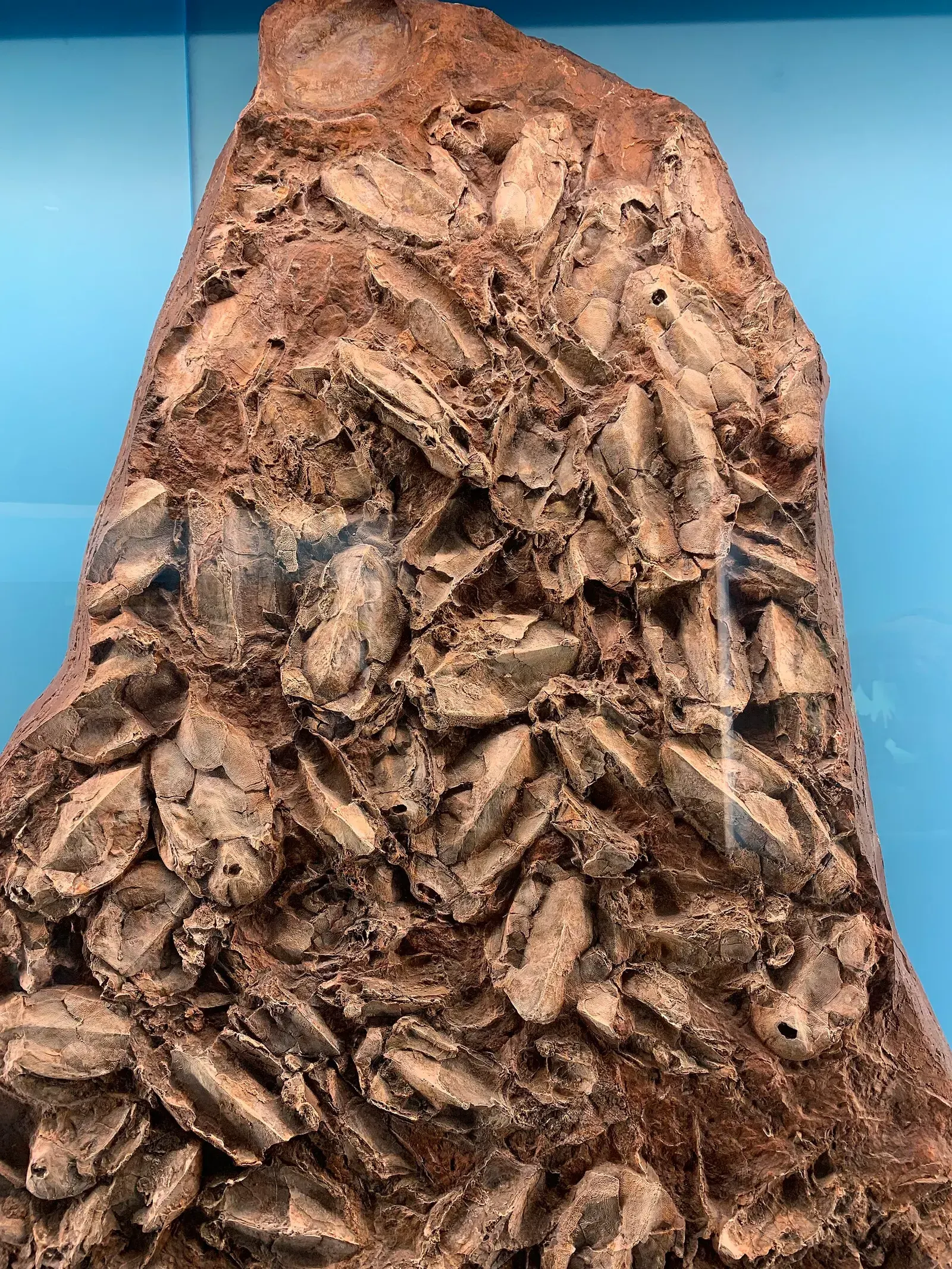
Bloopityboop (CC BY-SA 4.0) Canowindra grossi fossilsInternational significanceMineral / FossilLate Devonian, 360-370 million years ago
Specimens of Canowindra grossi, a lobe-finned crossopterygian fish unique to the Canowindra deposit and the largest fish in the 1956 slab. The species was described and reconstructed in 1973 by Dr Keith Thompson of Yale University from material in the original slab, confirming the site's extraordinary scientific richness.
A species known only from Canowindra, described by Yale University palaeontologist Keith Thompson, and central to the site's world significance.
- Materials
- fossil fish in Mandagery Sandstone
- Provenance
- From the Canowindra fish bed; type material studied from the 1956 slab; further specimens from the 1993 Ritchie excavation displayed at the Age of Fishes Museum.
Age of Fishes Museum (All rights reserved) 1963 EJ Holden 'fossil car'Local significanceVehicle1963 · General Motors-Holden's
A 1963 EJ Holden sedan bequeathed to the museum by Ken Soward and retained by the Age of Fishes Museum Association as a much-loved piece of the museum's own history. Nicknamed the 'fossil car', it connects the museum to the era of its founding community campaign.
A bequest intertwined with the museum's own community history, formally retained when Cabonne Council took over museum management in 2021.
- Provenance
- Bequeathed by Ken Soward; ownership confirmed to the Age of Fishes Museum Association following Cabonne Council's 2021 decision on gifted items.
Programs & courses
- Education programsSchool ProgramBook on request
Schools · Teachers
Education programs and tours for schools and groups, from early years up, focused on the Devonian fossil collection.
Provenance
Record verified 2026-10-10 · Confidence: high · Coordinates: derived from OpenStreetMap
- About - The Age Of Fishes Museum — accessed 2026-08-29
- Tours & Education - The Age Of Fishes Museum — accessed 2026-08-29
- Age of Fishes Museum - official site (ageoffishes.org.au) — accessed 2026-10-10
- Age of Fishes: Cabonne Council's decision on ownership of gifted items - Central Western Daily — accessed 2026-08-29